
The Effects of Differential Rearing on Glutamate Homeostasis and Addiction

Rodents reared in enriched conditions (EC) during childhood and adolescence have a variety of neurobiological and behavioral differences when compared to rodents reared in standard (SC) or isolated conditions (IC). These neurobiological differences impact numerous behaviors, including the response to drugs of abuse. The neurobiological mechanism for this effect remains unclear. Glutamatergic afferents to the […]
Progression of DCIS to Invasive Breast Cancer through CCR2 Chemokine Signaling
About 50,000 cases of ductal carcinoma in situ (DCIS) are diagnosed in the US every year, making DCIS the most common type of non-invasive breast cancer diagnosed in women. Up to 20% of all patients will experience disease recurrence accompanied by invasive ductal carcinoma (IDC). Current cyto- and histopathological approaches do not accurately predict disease […]
Kansas IDeA Network of Biomedical Research Excellence
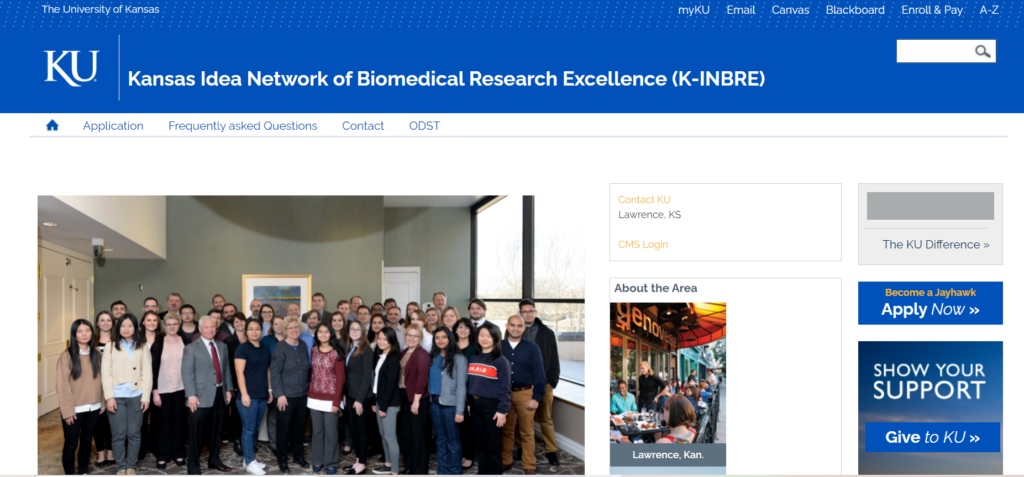
The Kansas IDeA Network of Biomedical Research Excellence (K-INBRE) is a statewide network of graduate and undergraduate universities in Kansas and Oklahoma that work cooperatively to improve biomedical research in Kansas. Kansas formed such a network in 2001 (Kansas BRIN) and has successfully continued as the Kansas INBRE. The University of Kansas Medical Center (KUMC) […]
Interdisciplinary Research in Vascular Biology
In this COBRE Phase III application, we will move to independence a world-class center of excellence in vascular biology at the Oklahoma Medical Research Foundation (OMRF). In Phases I and II, we fostered vascular biology research through a multidisciplinary approach. Mentoring launched the independent careers of outstanding junior investigators, who developed innovative new technologies, published […]
Data Sharing Practices and Reproducibility of Addiction Clinical Trials
An estimated 75%–90% of scientific experiments are not reproducible, resulting in $28 billion per year spent on irreproducible research in the United States alone. One promising solution to irreproducible clinical research is to publicly share trial data. However, journal editor and funding agency positions on data sharing, as well as the extent of reproducibility of […]
Reducing Alcohol, Tobacco, and Drug Use Among Latino Immigrant Youth: A Preliminary Test of the ¡Unidos Se Puede! Program
Reducing Alcohol, Tobacco, and Drug Use Among Latino Immigrant Youth: A Preliminary Test of the ¡Unidos Se Puede! Program ABSTRACT Adolescent alcohol, tobacco, and other drug (ATOD) use is a major public health concern, with rates for Latino middle school youth higher than other ethnic groups. One well-established precursor of adolescent ATOD use is psychosocial […]
Oklahoma IDeA Network of Biomedical Research Excellence
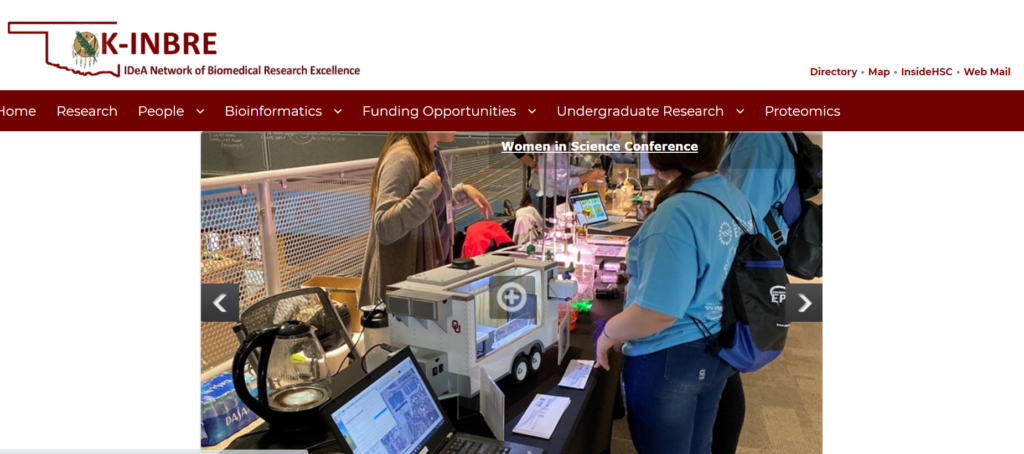
This renewal application for the Oklahoma IDeA Network for Biomedical Research Excellence (OK-INBRE) proposes to further enhance the statewide research infrastructure and biomedical research capacity in Oklahoma by: i) building on our established OK-INBRE research network with a scientific focus to strengthen the lead and partner institutions’ biomedical research expertise and infrastructure, ii) increasing the […]
Center for Cellular Metabolism Research in Oklahoma
Altered cellular metabolism contributes to the pathogenesis of many common diseases, such as cardiovascular disease, cancer, diabetes, and autoimmune disorders, which are prevalent in Oklahoma. However, metabolism- related research resources and infrastructure are currently insufficient and scattered in Oklahoma. To address these deficiencies, this Center for Cellular Metabolism Research in Oklahoma (CMRO) Phase I COBRE […]
Cellular and Molecular Geroscience
There have been impressive advances in understanding the molecular and cellular mechanisms of aging, including the discovery of manipulations that delay aging and increase healthspan. Importantly, these interventions also reduce or prevent age-related diseases. These outcomes raise the possibility that multiple human diseases arise from a common cause – aging. The premise of this CoBRE […]
Dakota Cancer Collaborative on Translational Activity
The objective of this grant application is to create a center to support and expand our ability to conduct full-spectrum clinical and translational research on various cancers. Establishing the Dakota Cancer Collaborative on Translational Activity (DACCOTA) will also allow us for the first time to apply our basic scientific and epidemiologic work to the clinical […]