
Targeting tumor and its microenvironment using nanotherapeutics for pancreatic cancer
Pancreatic cancer (PC) is lethal with a five-year survival rate of less than 9.2 % and a median survival of 5-6 months. The limited efficacy of mono-therapies has led to the exploration of combination therapies with limited success because of challenges associated with dose-limiting side effects, drug-associated toxicities, drug resistance, and poor pharmacokinetics. Importantly, these […]
The Role of LPA1 in the Etiology of Periodontal Disease

Lysophosphatidic acid (LPA) signaling has the potential to be of therapeutic value in periodontal disease (PD). LPA is central to homeostasis and pathophysiology, existing in bodily fluids at low levels in health, and becoming elevated in inflammation and pathology. Key to periodontal disease (PD), LPA is essential to all aspects of bone biology and inflammation […]
Center for Pediatric Research CoBRE
The primary goal of this application is to establish a foundation of basic scientists with translational research projects studying developmental mechanisms underlying children’s disease by establishing the Center for Pediatric Research. The origin of many pediatric diseases is from altered developmental programming related to the processes of cell proliferation, morphogenesis, migration, differentiation, and programmed death. […]
Surveillance for the Spread of COVID-19 Variants through South Dakota
The severe acute respiratory syndrome coronavirus-2 (SARS-CoV-2) is the cause of the coronavirus disease 2019 (COVID-19) pandemic that has currently caused over 30 million illnesses and 550,000 deaths in the United States. Variants that show changes in transmissibility (B.1.1.7 variant) and antigenic recognition (B.1.35 and P.1 variants) have recently emerged. The impact of these variants […]
South Dakota Biomedical Research Infrastructure Network
South Dakota Biomedical Research Infrastructure Network (SD BRIN), hosted by the Sanford School of Medicine of the University of South Dakota (USD) in Vermillion, SD, is the SD component of IDeA Networks of Biomedical Research Excellence (INBRE) funded by the NIH/NIGMS Institutional Development Award (IDeA) program since 2002. This proposal has evolved from insights gained […]
An interactive tool for in-depth and reproducible analysis of RNA-seq data
Bioinformatic analysis of large genomic datasets is a critical barrier for many biologists, especially those at smaller research institutions. Leveraging our team’s bioinformatics experience, our goal is to develop an interactive web application that can be used to easily translate RNA sequencing data into biological insights. We hypothesized that an integrated tool for reproducible, in-depth […]
Center for Cancer Biology
The primary goal of the COBRE is to build upon the critical mass of basic science and translational cancer researchers that has been developed during Phase I funding of the Cancer Biology Research Center. Phase II will focus on cancer research with direct translational relevance to human patients. Thus four of our five project leaders […]
Recognition and recruitment of RNA viruses into RNA silencing pathways
In eukaryotes, RNA silencing is a conserved mechanism of gene regulation and has essential antiviral roles in in plants, nematodes, and insects. Antiviral RNA silencing is triggered by viral dsRNA and is characterized by the accumulation of small interfering RNAs (siRNAs) derived from viral RNA (primary siRNAs) formed by Dicer- like proteins (DCL). Features of […]
Oncogenic mechanism of Sox2 in Rb-deficient tumors

The retinoblastoma tumor suppressor (Rb) is a central gene that has been implicated in the formation of multiple solid tumors. It does so by both the regulation of cellular proliferation and driving cellular differentiation to establish cellular identity. Lack of Rb then leads to cancer, yet the mechanisms which underlie the pro- oncogenic consequences of […]
Transdisciplinary approaches to American Indian and rural population health research
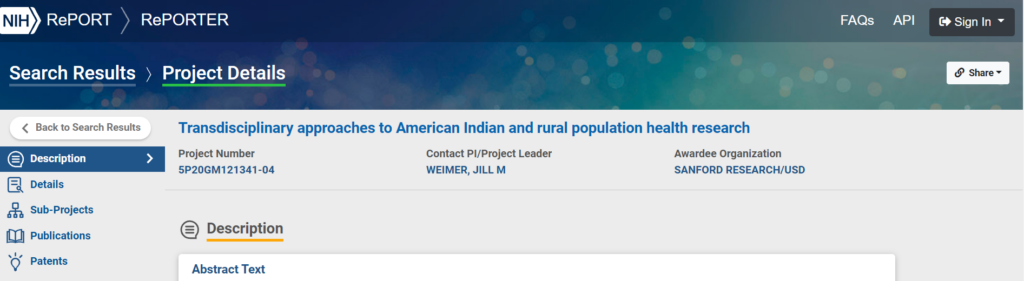
The purpose of the Transdisciplinary Center for Population Health (TCPH) COBRE is to facilitate the development of American Indian (AI) and rural health research in South Dakota. The theme that defines this center is the application of an ecological framework to address important issues in AI and rural health populations. All of the projects incorporate […]