
Vermont Center on Behavior and Health

This is a Phase 2 Center of Biomedical Research Excellence (COBRE) application to further develop the Vermont Center on Behavior and Health (VCBH) at the University of Vermont (UVM). This multidisciplinary research center focuses on investigating relationships between unhealthy behavior patterns (e.g., substance abuse, physical inactivity, unhealthy food choices, non-adherence with recommended medical regimens) and […]
Mechanisms Underlying the Protective Vascular Effects of Dietary Potassium in Humans
Significant Public Health efforts have been made towards salt reduction but most have met with failure. Dietary factors such high sodium/low potassium diets contribute to the development of cardiovascular diseases (CVDs) such as atherosclerosis and high blood pressure (BP). This is important as CVD is the number one killer in the U.S. While the role […]
Trans-generational Effects of Social Learning?
It is well accepted that cognitive experiences can have physiological consequences, and this has been shown in a variety of animal species. In social animals, groups of individuals share information about the environment and about themselves. This sharing of information is beneficial to those capable of learning from the experiences of others. Social learning can […]
SARS-CoV-2 whole genome sequencing from large-scale campus testing and state-wide communities in NH–Center of Integrated Biomedical and Bioengineering Research
The Covid-19 pandemic has challenged public health systems throughout the world. Since October 2020, novel variants of concern of the SARS-CoV-2 virus have been identified and appear to be a significant concern for rates of infection, severity of disease, and the potential for variable responses to prior infection and/or vaccination. In the US—and especially in […]
Personalized Deep Learning Models of Rapid Changes in Major Depressive Disorder Symptoms using Passive Sensor Data from Smartphones and Wearable Devices
Major depressive disorder (MDD) is highly prevalent and the leading cause of global disease burden. Associated with over 1,000 different symptom profiles, MDD is highly heterogeneous. The majority of MDD symptom change occurs across hours. Consequently, there is a need to increasingly focus MDD research on personalized assessment of these rapid symptom fluctuations. To date, […]
DRIVEN: Accelerating Medical Entrepreneurship in the Northeast
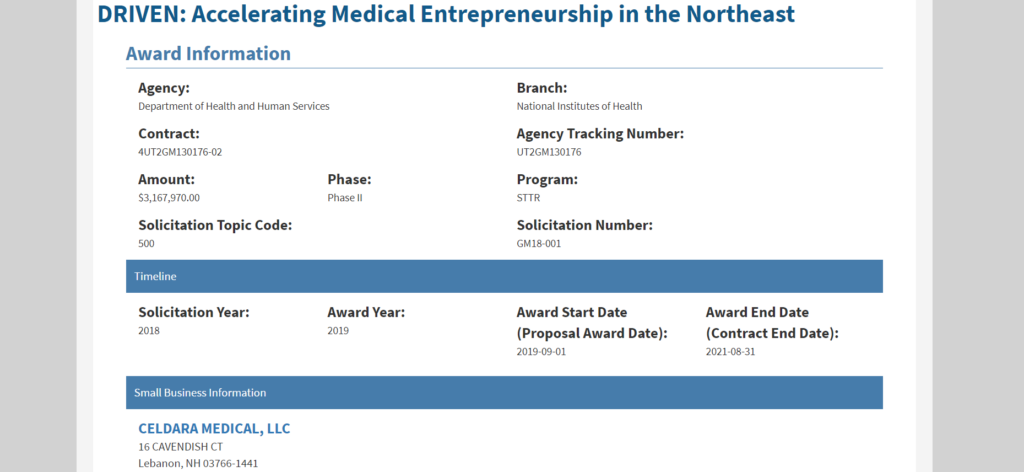
This project describes the formation, launch and operation of the DRIVEN Accelerator Hub, with the express goal of reducing morbidity and mortality by increasing the number of medical entrepreneurs and their level of competency. The Hub is focused on the Northeast and, in collaboration with similar Hubs, will contribute nationwide. It will, in a facile, […]
Prevention of PTOA via regulation of the cytomechanics of chondrocytes
Traumatic injuries in human joints can cause cartilage degeneration and lead to post-traumatic osteoarthritis. Few techniques are now available in practice to prevent the cartilage from degeneration after the joint injuries. Our research discovered that statins, a class of drugs used by 40 million US people to control the cholesterol levels, can effectively protect the […]
Center of Biomedical Research Excellence in Cardiovascular Health
Cardiovascular diseases (CVD) such as heart disease, heart failure, and stroke remain the number one cause of death in the U.S. for both men and women. CVD affect Delawareans at a rate significantly above the national average. According to the Centers for Disease Control, Delaware is not even in the top half (i.e., better half) […]
Disc mechanics and altered loading in degeneration
The function of the intervertebral disc is mechanical. but disc pathology and LBP is currently evaluated in terms of structural changes, “structural degeneration (s-degen)”, observed from static images, and not in terms of mechanical function changes. While s-degen is considered to be related to pathology, it has had little clinical success discriminating pathology from natural […]
Center for Pediatric Research
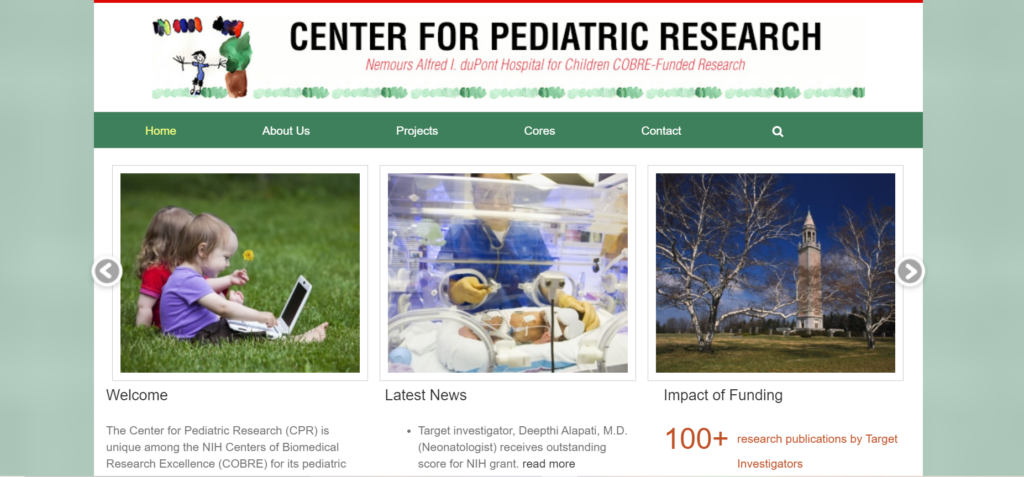
The overall objective of this proposal is to build on the success of COBRE phase I and II grants, as well as 3 ARRA supplements. Thus, the goal of Phase III is to sustain infrastructure cores, mentorship programs, and pilot project programs, in order to provide the Center for Pediatric Research (CPR) the resources to […]