
Discovery of Chemical Probes and Therapeutic Leads
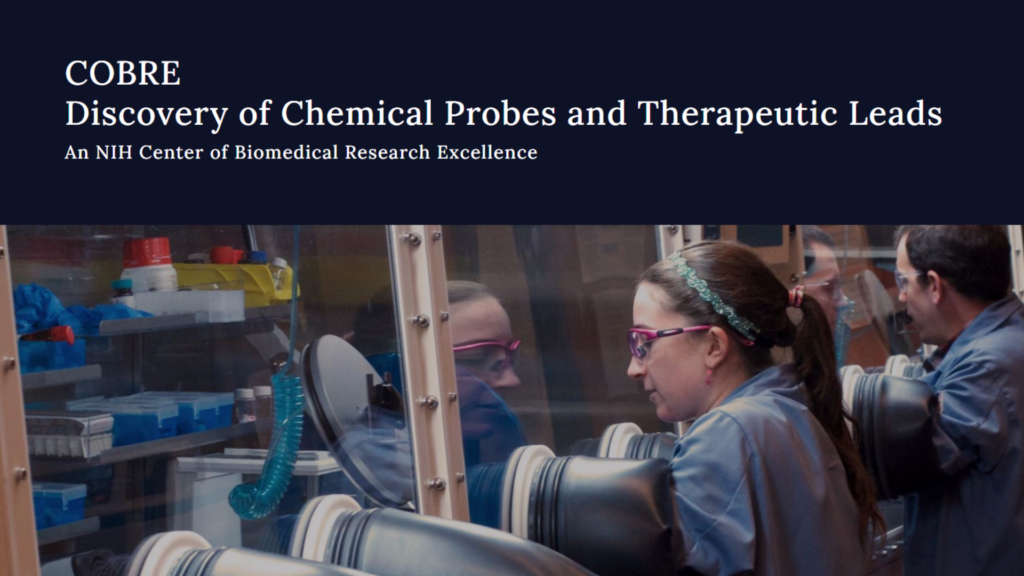
In this COBRE, novel approaches to developing chemical probes and therapeutic leads will be pursued by a diverse team of scientists. This COBRE will create new libraries for high-throughput screening, provide new perspectives on innate immune response and neurodegenerative disease, enable new screening technology, and advance the state of the art in virtual screening. The […]
Vermont Genetics Network – Vermont INBRE

The Vermont IDeA Network for Biomedical Research Excellence (INBRE) is the Vermont Genetics Network (VGN). We build biomedical research capacity throughout the state by promoting faculty and Student research at our Baccalaureate Partner Institutions (BPIs) with research awards and renovations;reaching out to BPIs and other colleges with delivery of curriculum modules for students to have […]
New Hampshire IDeA Network of Biological Research Excellence (NH-INBRE)
This application for renewal of the grant supporting the New Hampshire IDeA Network of Biological Research Excellence (NH-INBRE) proposes to 1) Continue to improve the biomedical research infrastructure at the Partners; 2) Continue to increase research opportunities for undergraduates in the state; 3) Continue to build the science and research culture at the Partners that […]
Center for Quantitative Biology: A Focus on “Omics”, From Organisms to Single Cells
Center for Quantitative Biology: A focus on omics, from organisms to single cells PROJECT SUMMARY High-throughput genomic, proteomic, metabolomic, and immune-profiling technologies now provide a wealth of data that can be mined to interrogate basic biological processes, changes in cellular or organismal populations, and the molecular bases of disease, at levels ranging from the whole […]
Vermont Center for Cardiovascular and Brain Health
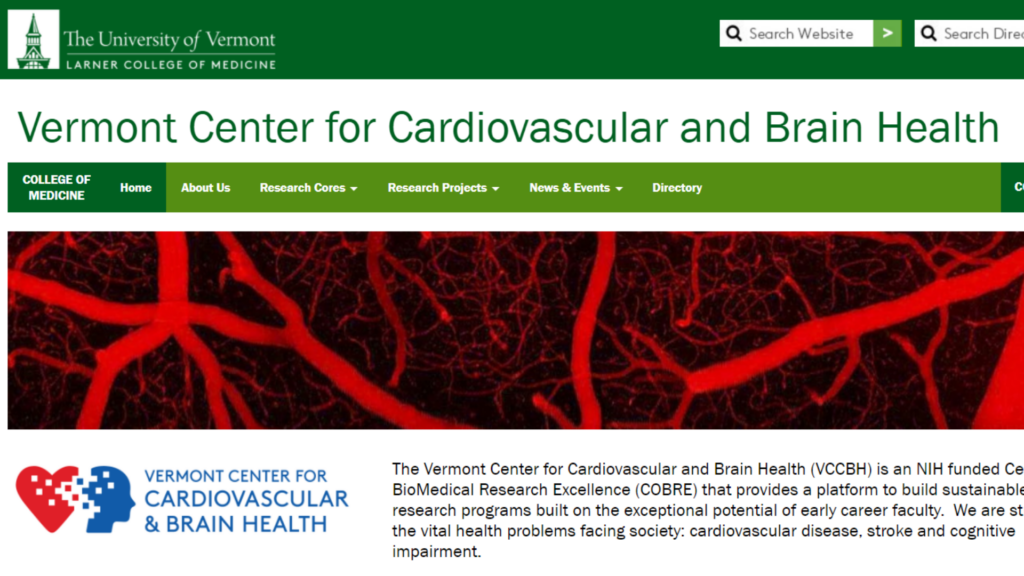
The Vermont Center for Cardiovascular and Brain Health (VCCBH) is an NIH funded Center for BioMedical Research Excellence (COBRE) that provides a platform to build sustainable research programs built on the exceptional potential of early career faculty. We are studying the vital health problems facing society: cardiovascular disease, stroke and cognitive impairment. We are moving […]
Northern New England Clinical and Translational Research Network
The mission of the Northern New England Clinical and Translational Research (NNE-CTR) Network is to develop and sustain a clinical and translational research infrastructure that supports improvement in rural and community health for inhabitants in the IDeA states of Maine, New Hampshire and Vermont. This goal will be accomplished through complementary and synergistic collaborations of […]
Neonatal Trauma Alters Subsequent Fear and Sensory Function via Changes in Limbic CRF and CORT
There is now agreement that early life pain and stress are risk factors for subsequent changes in emotional, mood and sensory systems. Nevertheless, painful events continue to occur in the context of neonatal intensive care units (NICU) and other preventable settings. Similarly, a variety of less controllable stressful situations, such as suboptimal parenting conditions, also […]
Rhode Island IDeA Network of Biomedical Research Excellence
The overarching goal of Rhode Island-IDeA Network of Biomedical Research Excellence (RI-INBRE) is to improve institutional capacity for biomedical research excellence and to expand student experiential training opportunities in the State of Rhode Island. We will accomplish this goal by growing statewide institutional research capacity, supporting early career research faculty development, and by providing structured […]
Comparative Functional Genomics INBRE in Maine
The Maine IDeA Network of Biomedical Research Excellence (INBRE) is a collaborative network of Maine educational and research institutions led by the MDI Biological Laboratory and sponsored by the National Institute of General Medical Sciences (NIGMS) of the National Institutes of Health (NIH). Maine INBRE members also include Bates College, Bowdoin College, Colby College, College of the Atlantic, The Jackson Laboratory, Southern Maine Community […]
Genome-Wide Association for Affective Withdrawal in Outbred Mice
Negative mood states that characterize drug withdrawal are partly under genetic control and have been associated with craving and relapse to drug use in humans. Despite the fact that a large majority of amphetamine (AMP) users report experiencing negative mood states (such as dysphoria, anhedonia, and anxiety) during withdrawal, AMP withdrawal has been much less […]