
Reducing Alcohol, Tobacco, and Drug Use Among Latino Immigrant Youth: A Preliminary Test of the ¡Unidos Se Puede! Program
Reducing Alcohol, Tobacco, and Drug Use Among Latino Immigrant Youth: A Preliminary Test of the ¡Unidos Se Puede! Program ABSTRACT Adolescent alcohol, tobacco, and other drug (ATOD) use is a major public health concern, with rates for Latino middle school youth higher than other ethnic groups. One well-established precursor of adolescent ATOD use is psychosocial […]
Oklahoma IDeA Network of Biomedical Research Excellence
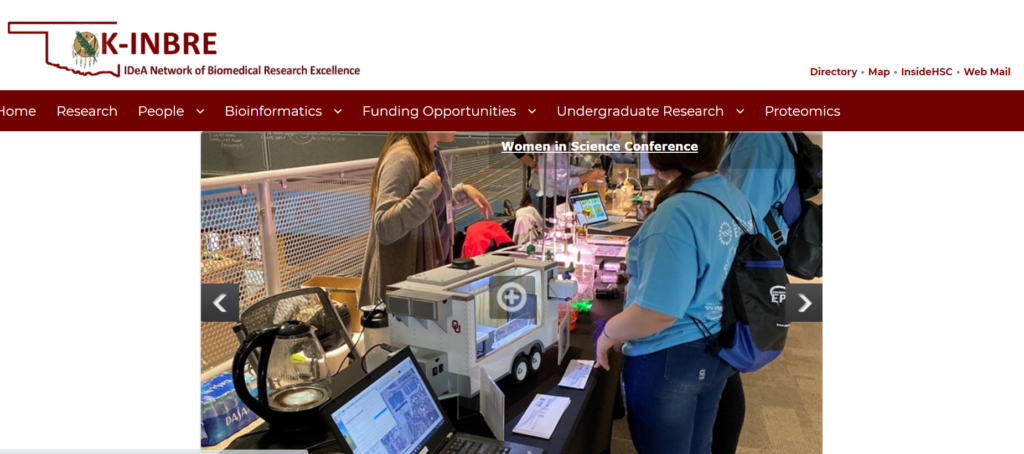
This renewal application for the Oklahoma IDeA Network for Biomedical Research Excellence (OK-INBRE) proposes to further enhance the statewide research infrastructure and biomedical research capacity in Oklahoma by: i) building on our established OK-INBRE research network with a scientific focus to strengthen the lead and partner institutions’ biomedical research expertise and infrastructure, ii) increasing the […]
Center for Cellular Metabolism Research in Oklahoma
Altered cellular metabolism contributes to the pathogenesis of many common diseases, such as cardiovascular disease, cancer, diabetes, and autoimmune disorders, which are prevalent in Oklahoma. However, metabolism- related research resources and infrastructure are currently insufficient and scattered in Oklahoma. To address these deficiencies, this Center for Cellular Metabolism Research in Oklahoma (CMRO) Phase I COBRE […]
Cellular and Molecular Geroscience
There have been impressive advances in understanding the molecular and cellular mechanisms of aging, including the discovery of manipulations that delay aging and increase healthspan. Importantly, these interventions also reduce or prevent age-related diseases. These outcomes raise the possibility that multiple human diseases arise from a common cause – aging. The premise of this CoBRE […]
Center of Biomedical Research Excellence, Epigenomics of Development and Disease
The goal of this COBRE II application is to expand and enhance research into epigenetic mechanisms underlying development and disease at the University of North Dakota by providing ongoing support to the Epigenetics Working Group (EWG). In COBRE I the EWG made significant progress towards development of an epigenetics/epigenomics program through support of individual projects; […]
Center for Diagnostic and Therapeutic Strategies in Pancreatic Cancer
Project Summary (Center for Diagnostic and Therapeutic Strategies in Pancreatic Cancer) In spite of notable advances in detection and treatment of various cancers, pancreatic cancer is one of the leading causes of cancer-related deaths in both men and women in the U.S. with a 5-year survival rate of less than 6%. A lack of early […]
Circadian disruption and consequences of light pollution
Project Summary Two-thirds of the world’s populated areas are currently above the threshold set for light pollution. It is clear from decades of research that light is the most important time cue for the regulation of circadian rhythms. Circadian clocks can be reset by external light cues, and light pulses at night can shift […]
Smooth Muscle Plasticity
In this Phase III COBRE we will continue to develop the thematic focus: Smooth Muscle Plasticity, by continuing and enhancing Core laboratory services developed during COBRE Phases l&ll. Smooth muscles are complex tissues containing multiple cell types. Treating these muscles as homogenous tissues has been a common way to evaluate gene expression and the changes […]
Characterizing the contribution of trogocytosis to T Follicular Helper differentiation and humoral immune responses
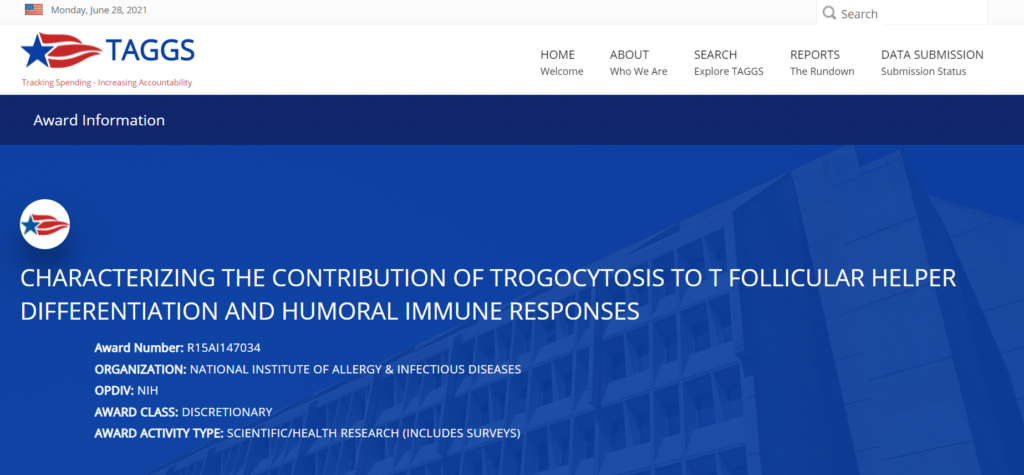
Recognition of cognate MHC class II:peptide complexes by CD4+ T cells triggers large-scale molecular rearrangements at the T- antigen presenting cells (APC) interface forming a structure called the immune synapse. At the synapse, T cells capture large membrane fragments and associated proteins from the APC in a process termed trogocytosis. While this phenomenon has the […]
Craniofacial cartilage from human stem cells through neural crest stem cells
Craniofacial cartilage from human stem cells through neural crest stem cells Birth defects or injuries to the face can compromise an individual’s self image and interactions with other people. At present, it is difficult to reconstruct cartilaginous features (nose, ears) with plastic surgery techniques, and transplanted tissue is often rejected without immunosuppressants. An attractive potential […]