
Oklahoma Center of Medical Imaging for Translational Cancer Research
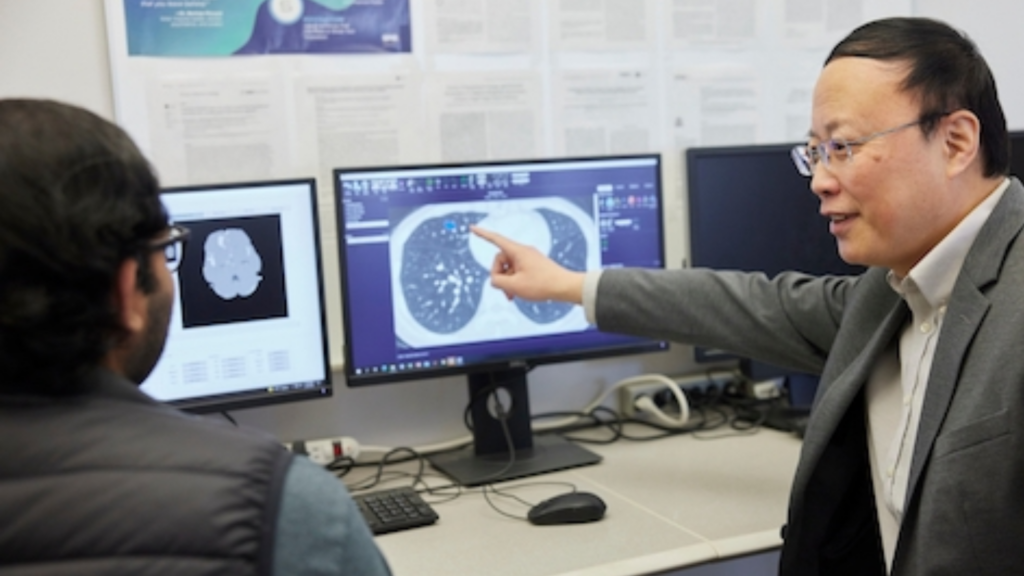
Abstract Text Oklahoma Center of Medical Imaging for Translational Cancer Research Abstract – Overall Component In order to highly align with the Strategic Plan of the University of Oklahoma (OU) to create the multidisciplinary Research Centers of Excellent in one of the primary research themes namely, the future of health, the overarching objective of […]
Cellular and Molecular Geoscience COBRE
There have been impressive advances in understanding the molecular and cellular mechanisms of aging, including the discovery of manipulations that delay aging and increase healthspan. Importantly, these interventions also reduce or prevent age-related diseases. These outcomes raise the possibility that multiple human diseases arise from a common cause ? aging. The premise of this CoBRE […]
CIRCA, the Center for Integrative Research on Childhood Adversity

The proposed Center for Biomedical Research Excellence (CoBRE) will establish the Children’s Health Equity Solutions Center (CHESC). The long-term goal of the CHESC is to eliminate unjust differences in children’s health by race, ethnicity and socioeconomic status through effective translational science. The immediate goal of the CHESC is to build Oklahoma State University-Tulsa’s research environment […]
Oklahoma COBRE in Structural Biology

Structural biology is a multidisciplinary research area that focuses on the important relationship between macromolecular structure and function. The Oklahoma Center of Biomedical Research Excellence (COBRE) in Structural Biology (OCSB) was established in 2012 with Phase I funding. The OCSB supports faculty research projects and three core facilities on the OU-Norman and OU Health Sciences […]
Oklahoma Center for Microbial Pathogenesis and Immunity
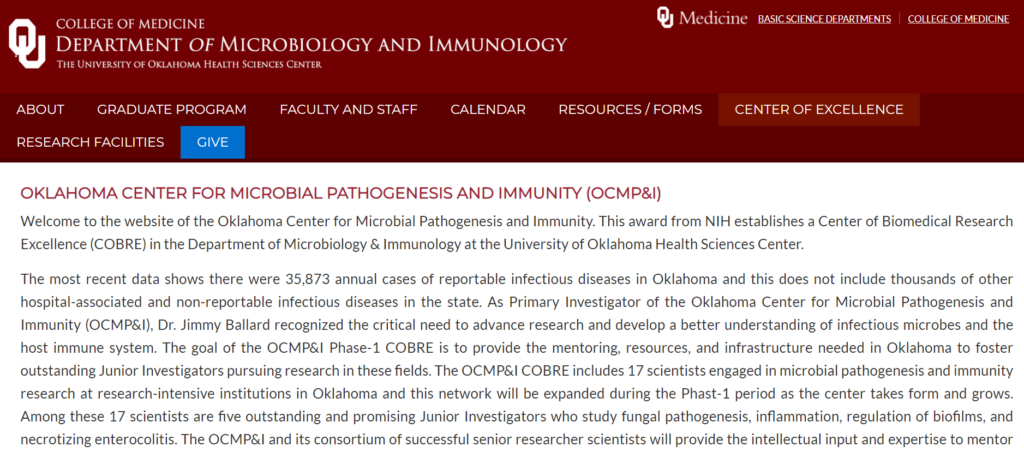
The goal of this Phase-1 COBRE program is to develop and enhance the research infrastructure, mentoring, and collaborative environment to support five Junior Investigators in the multi-disciplinary fields of microbial pathogenesis and immunity. To achieve this goal, The Oklahoma Center for Microbial Pathogenesis and Immunity (OCMP&I) COBRE will be established and fostered as a center […]
Mentoring Translational Cancer Research in Oklahoma
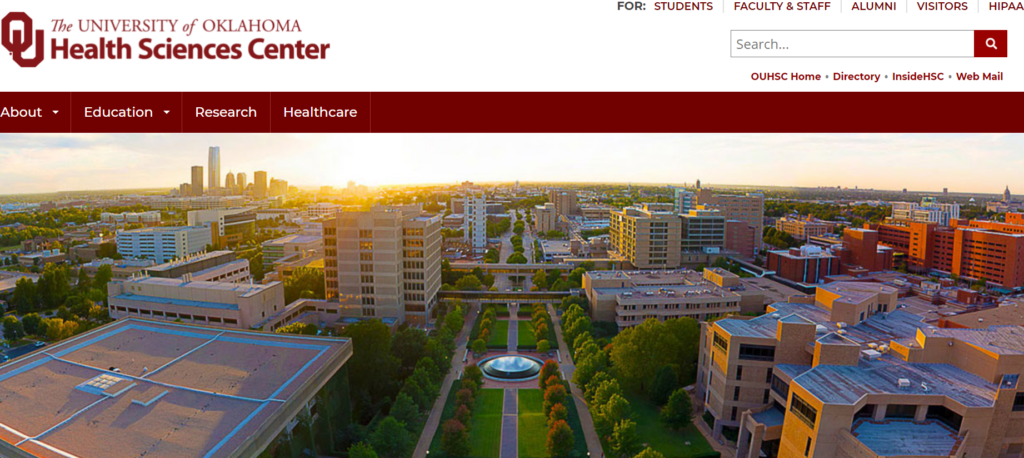
The overall objectives of the proposal are to improve the quality and quantity of cancer research and increase NIH funding at the University of Oklahoma Health Sciences Center (OUHSC), Oklahoma through the mentoring of promising junior Target investigators (Target investigators) and to develop support for the infrastructure for cancer research. Building on the success of […]
The Center for Neuroscience-based Mental Health Assessment and Prediction

Mood and anxiety disorders will account for approximately $16 x 109 lost productivity or 25% of global GDP over the next 20 years. Eating disorders are among the deadliest psychiatric diseases and Anorexia Nervosa is two to three times more deadly than schizophrenia, bipolar and major depressive disorder. The Center for Neuroscience-based Mental Health Assessment […]
Expanding Excellence in Developmental Biology in Oklahoma
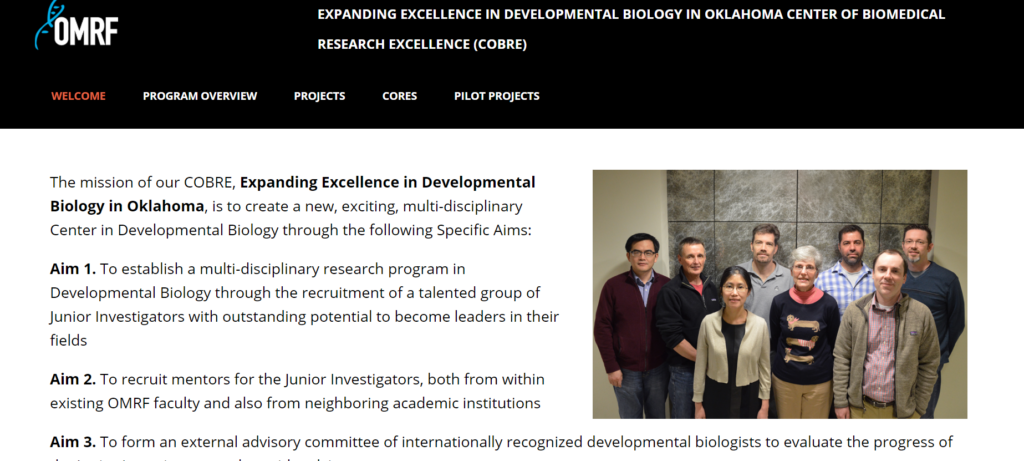
Our overall goal is to strengthen our Developmental Biology COBRE by mentoring five newly-recruited investigators, each studying important questions in Developmental Biology with translational implications. We will build upon our success in Phase I when our COBRE Investigators made important discoveries resulting in 53 published papers (many in high-impact journals), 91 presentations at invited seminars […]
Oklahoma Shared Clinical and Translational Resources

An Oklahoma born in 2010 has the fifth lowest life-expectancy in the US and American Indians have the shortest, 7.3 years less than the US average. Cancer, diabetes, cardiovascular disease, arthritis, and autoimmunity are leading causes of disability and early mortality, serving as sources of major health disparities in Oklahoma and other IDeA-states. Along with […]
Mentoring Diabetes Research in Oklahoma
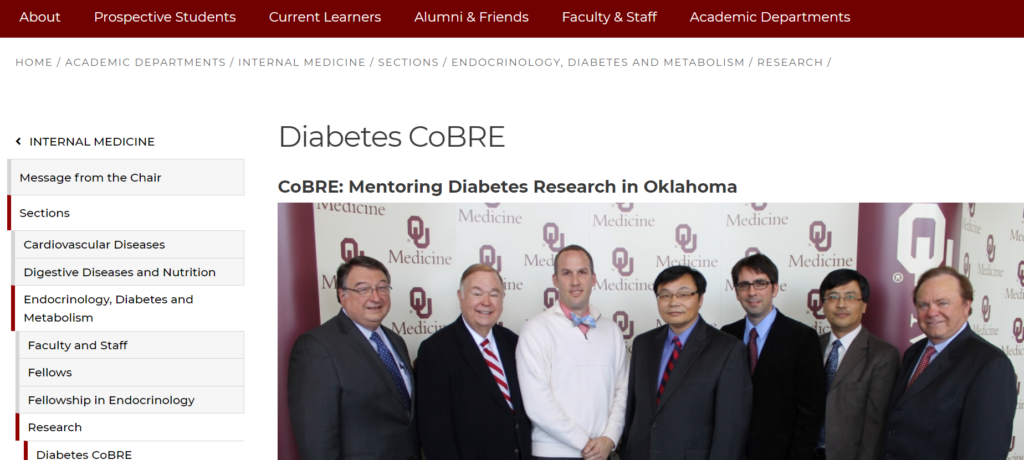
Oklahoma is one of the states in the US with the highest prevalence of diabetes, with 10% of the population affected. Diabetes is particularly prevalent among Native American communities, where it affects up to 40% of older individuals in some tribes. Thus, diabetes and its complications constitute a major threat to the working- age and […]