
COBRE, Epigenomics of Development and Disease
The Epigenetics Working Group unites multiple research teams using different conceptual frameworks and experimental approaches to study epigenetic mechanisms regulating development and aging. Using a wide range of experimental systems, research teams are aiming to uncover how exposure to developmental and environmental stress leads to the accumulation of genome-wide epigenetic changes and whether these changes […]
North Dakota INBRE Health and the Environment
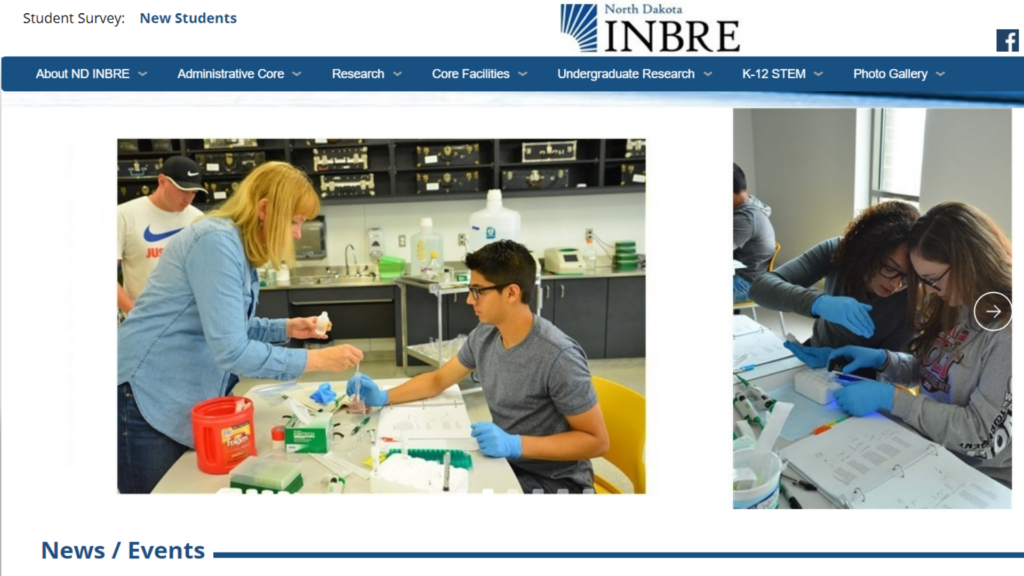
North Dakota is a large land mass, low population, agricultural state with only 755,393 citizens occupying over 68,976 square miles. Thirty-six (36) of North Dakotas 53 counties retain a Federal designation as ?Frontier Counties? since they contain less than 6 people per square mile. A result of this environment was that the system of higher […]
Center for Diagnostic and Therapeutic Strategies in Pancreatic Cancer
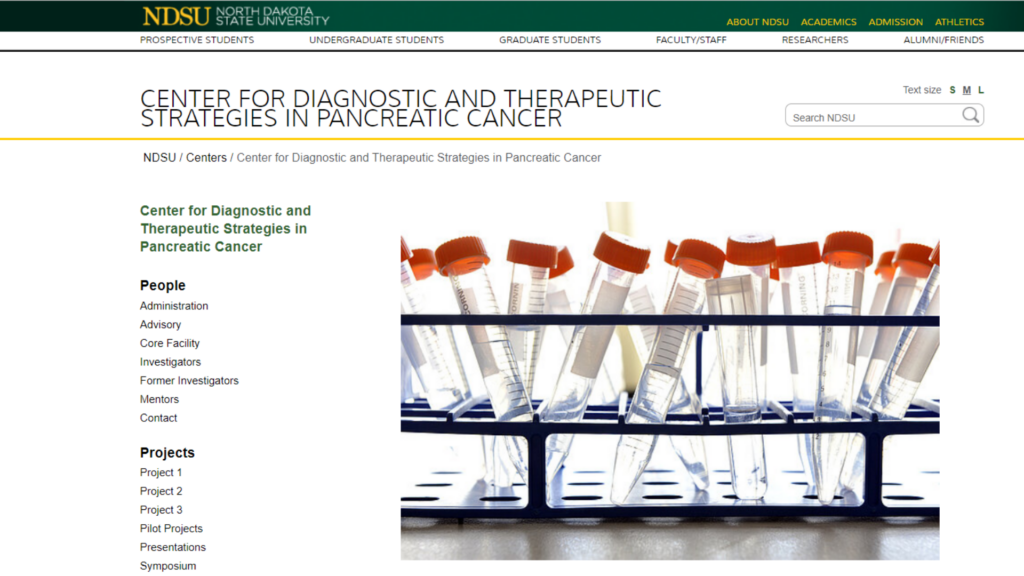
(Center for Diagnostic and Therapeutic Strategies in Pancreatic Cancer) In spite of notable advances in detection and treatment of various cancers, pancreatic cancer is one of the leading causes of cancer-related deaths in both men and women in the U.S. with a 5-year survival rate of less than 6%. A lack of early symptoms, short […]
Center for Excellence In-Host Pathogen Interactions
The objective of this grant application is to establish a Center of Biomedical Excellence in Host- Pathogen interactions that is highly interactive and consists of a dynamic group of junior investigators whose research focus is on understanding the mechanisms that underline the host respose to various infectious agents. We have proposed five new independent, but […]
Center for Biobehavioral Mechanisms of Eating Behavior
We propose to establish a Center for Bio-behavioral Mechanisms of Eating Behavior (CBM-EB) at Sanford Research, Fargo along with the University of North Dakota School of Medicine and North Dakota State University (NDSU). The proposed CBM-EB will initially consist of five thematically related research projects focusing on mechanisms related to eating disorders and maladaptive eating […]
Center of Biomedical Research Excellence, Epigenomics of Development and Disease
The goal of this COBRE II application is to expand and enhance research into epigenetic mechanisms underlying development and disease at the University of North Dakota by providing ongoing support to the Epigenetics Working Group (EWG). In COBRE I the EWG made significant progress towards development of an epigenetics/epigenomics program through support of individual projects; […]
Center for Diagnostic and Therapeutic Strategies in Pancreatic Cancer
Project Summary (Center for Diagnostic and Therapeutic Strategies in Pancreatic Cancer) In spite of notable advances in detection and treatment of various cancers, pancreatic cancer is one of the leading causes of cancer-related deaths in both men and women in the U.S. with a 5-year survival rate of less than 6%. A lack of early […]