
Center for Neuroplasticity at the University of Puerto Rico
The University of Puerto Rico (UPR) Medical Sciences Campus proposes to sustain and expand its COBRE Center for Neuroplasticity. The second phase of Center operation will significantly strengthen the research infrastructure of the institution and will impact biomedical investigation throughout the island. The specific aims of the COBRE Center for Neuroplasticity at the University of […]
Glycoscience Center of Research Excellence
The University of Mississippi proposes to establish the Glycoscience Center of Research Excellence (GlyCORE), a Phase I Center of Biomedical Research Excellence. Glycoscience is an essential and rapidly emerging field of biomedical science, and the challenging nature of glycoscience research requires tools and expertise that are not commonly found in the biomedical research community. Moreover, […]
Center for Pre-Clinical Cancer Research
Summary Overall Core. The Center for Pre-Clinical Cancer Research (Cancer COBRE) aims to identify clinically relevant mechanisms of human cancer disease using models that closely reflect the disease state in the context of the tumor microenvironment. Recent advances in 3D tumor culture techniques have intensified the focus on in vitro human cell culture systems to […]
Mississippi Center for Clinical and Translational Research
Obesity is associated with heightened risk of cardiovascular diseases, diabetes, and cancers, as well as increased all-cause mortality. Mississippi consistently ranks among the states with the highest rates of obesity, particularly among African Americans. The University of Mississippi Medical Center has a history of success in basic research, including obesity research, and observational studies, but […]
Tcf21 and visceral adipose tissue development and expansion

Tcf21 and visceral adipose tissue development and expansion: White adipose tissue (WAT) is divided into two categories, visceral adipose tissue (VAT) and subcutaneous adipose tissue (SAT), based on their anatomical locations. A specific positive correlation has been suggested between pathologic VAT expansion and insulin resistance, which makes VAT a potential target for treating metabolic diseases […]
Metabolic Basis of Disease
Metabolic Basis of Disease: The overall goal of this new center is to facilitate the growth of young intellectual talent and build the scientific infrastructure that will promote biomedical research discoveries that will enhance our understanding of the metabolic aspects of different diseases. Specifically, we have identified four junior faculty with research interests in different, […]
Center for Lung Biology and Disease
The objective of this proposal is to establish a Center of Excellence (COE) in Pulmonary Diseases that is highly interactive and consists of a dynamic group of junior investigators whose research focus is on understanding the molecular and cellular immunological mechanisms associated with the pathogenesis if lung diseases. The Promising Junior Investigators (PJIs) have proposed […]
Center for Applied Immunology and Pathological Processes
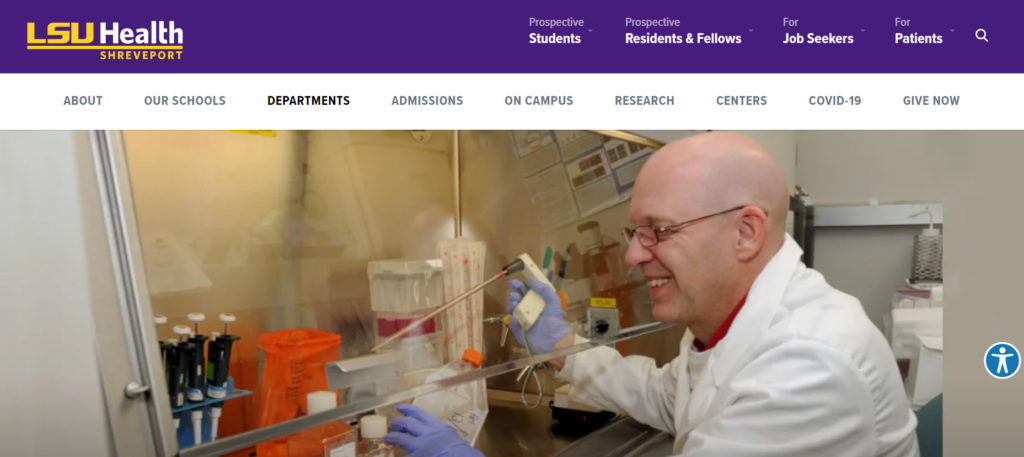
Center for Applied Immunology and Pathological Processes: A properly functioning and effective immune system is needed to control infection by bacterial, viral and other pathogen invaders, growth of aberrant cells, as well as for proper embryonic development, wound healing, bone remodeling, and other normal homeostatic processes. Thus, understanding the innate and adaptive immune responses and […]
Center for Redox Biology and Cardiovascular Disease
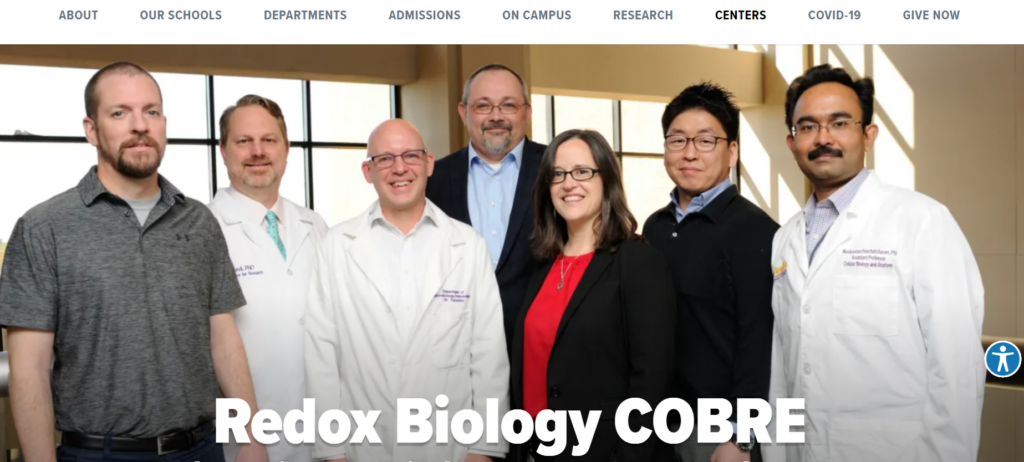
Project Abstract Cardiovascular disease is the leading cause of death and disability in the United States with a disproportional effect on southern regions of the country. According to the 2016 America’s Health Rankings Annual Report, Louisiana ranks 46/50 in cardiovascular deaths and 48/50 in heart disease placing it in the lowest categories of cardiovascular health […]
Center of Biomedical Research Excellence in Pathogen Host Interactions

The Phase I COBRE at Mississippi State University (MSU) has catalyzed a transformation in the biomedical research enterprise, particularly in the research focus area of the COBRE, pathogen-host interactions. In the CVM Basic Sciences Department, where most COBRE investigators worked, the research culture has changed; 19 of 20 faculty members now have competitive extramural funding. […]