
Injury Control COBRE
Injury occurrence is typically thought of as “bad luck” or fatalistic; however, over the last fifty years the field of injury control science has grown to demonstrate that injuries can be controlled. Many injuries can be prevented through behavioral interventions, engineering strategies, dissemination of education, and policy implementation. Mission: The Rhode Island Hospital (RIH) Injury […]
IDeA Networks of Biomedical Research Excellence in Kentucky

The overarching goal of the Kentucky Institutional Development Award (IDeA) Network of Biomedical Research Excellence (KY INBRE) is to build capacity for health-related and biomedical research in the Commonwealth of Kentucky. We will build collaborative research and research-training community throughout the state. Our primary collaborative network is represented by two research-intensive universities, five state-supported and […]
NAIPI Central IDEA member states Updated
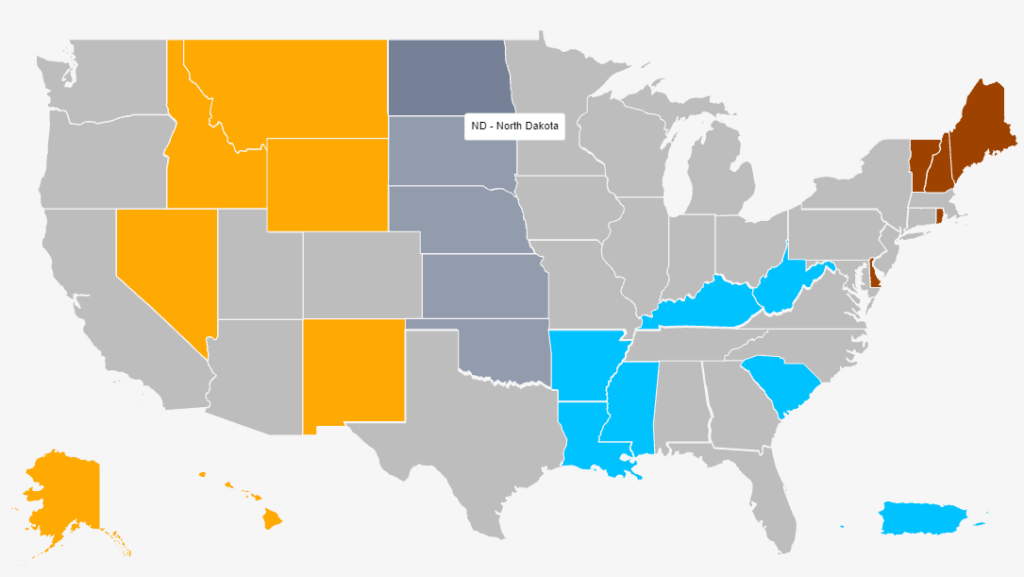
We are excited to share with our members that all of pages for Central IDEA member states have been updated on the NAIPI portal. Each page has links to senators and district representatives, NIH funding numbers as well as key PIs and funded programs. Central Region: North Dakota: https://naipistg.wpenginepowered.com/central-region/north-dakota/ South Dakota: https://naipistg.wpenginepowered.com/central-region/south-dakota/ Nebraska: https://naipistg.wpenginepowered.com/central-region/nebraska/ Kansas: […]
North Dakota INBRE Health and the Environment
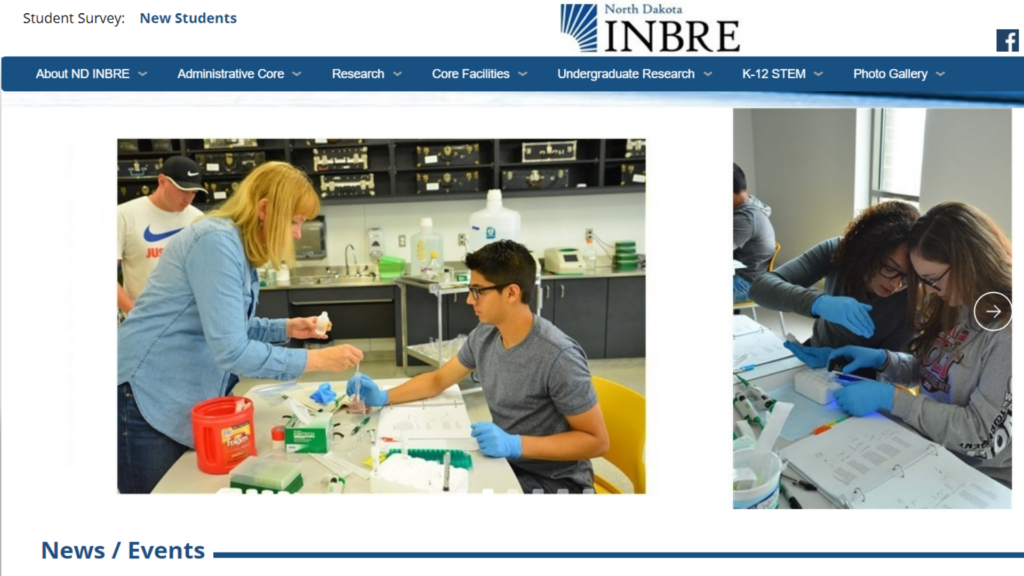
North Dakota is a large land mass, low population, agricultural state with only 755,393 citizens occupying over 68,976 square miles. Thirty-six (36) of North Dakotas 53 counties retain a Federal designation as ?Frontier Counties? since they contain less than 6 people per square mile. A result of this environment was that the system of higher […]
South Carolina IDeA Networks of Biomedical Research Excellence (SC INBRE)

The South Carolina IDeA Networks of Biomedical Research Excellence (SC INBRE) is a state-wide network comprised of three Comprehensive Research Universities (CRUs) and eleven Primarily Undergraduate Institutions (PUIs) whose goals are to enhance the biomedical research infrastructure and promote undergraduate research training in South Carolina while increasing access to research opportunities and careers in biomedicine […]
New Hampshire IDeA Network of Biological Research Excellence (NH-INBRE)

This application for renewal of the grant supporting the New Hampshire IDeA Network of Biological Research Excellence (NH-INBRE) proposes to 1) Continue to improve the biomedical research infrastructure at the Partners; 2) Continue to increase research opportunities for undergraduates in the state; 3) Continue to build the science and research culture at the Partners that […]
Vermont Genetics Network – Vermont INBRE

The Vermont IDeA Network for Biomedical Research Excellence (INBRE) is the Vermont Genetics Network (VGN). We build biomedical research capacity throughout the state by promoting faculty and Student research at our Baccalaureate Partner Institutions (BPIs) with research awards and renovations;reaching out to BPIs and other colleges with delivery of curriculum modules for students to have […]
Mississippi INBRE
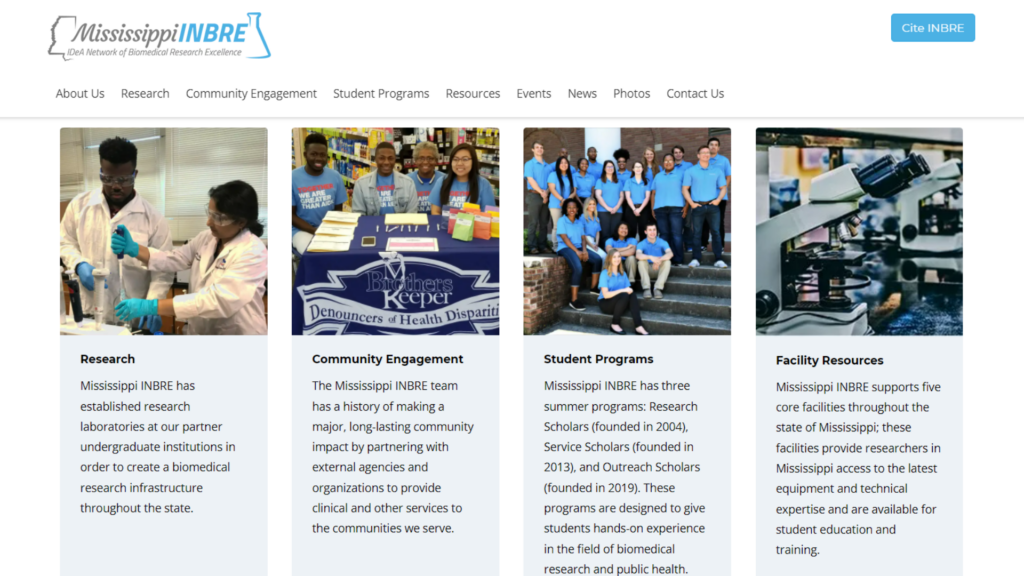
Mississippi IDeA Network of Biomedical Research Excellence (INBRE) is a network of colleges and universities, designed to build a biomedical research infrastructure in Mississippi. Our mission is to reach out to Mississippians in order to improve health throughout the state and to engage talented researchers and students in biomedical research projects that will increase the state’s […]
Recognition and recruitment of RNA viruses into RNA silencing pathways

In eukaryotes, RNA silencing is a conserved mechanism of gene regulation and has essential antiviral roles in in plants, nematodes, and insects. Antiviral RNA silencing is triggered by viral dsRNA and is characterized by the accumulation of small interfering RNAs (siRNAs) derived from viral RNA (primary siRNAs) formed by Dicer- like proteins (DCL). Features of […]
Center for Cancer Biology
The primary goal of the COBRE is to build upon the critical mass of basic science and translational cancer researchers that has been developed during Phase I funding of the Cancer Biology Research Center. Phase II will focus on cancer research with direct translational relevance to human patients. Thus four of our five project leaders […]