
Chemical Biology of Infectious Disease
“Chemical biology is the focus of our efforts because it entails the discovery of chemical entities able to modulate pathways related to infectious processes. Such work can lead to an increase in biological understanding and the identification of novel targets for chemical intervention. Appropriate validation of such targets in advanced model systems, including animals, along […]
Cognitive and Neurobiological Approaches to Plasticity Center
This COBRE application will form a unique, thematic research center on Cognitive and Neurobiological Approaches to Plasticity (C-NAP). Four primary research projects bridge areas of excellence in the Cognitive and Behavioral Neuroscience programs at Kansas State University (KSU) and the Human Factors program at Wichita State University (WSU). The projects examine cognitive/neural plasticity across the […]
Center on Emerging and Zoonotic Infectious Diseases
This COBRE application will form a unique research center on Emerging and Zoonotic Infectious Diseases (EZID). Four primary research projects bridge areas of excellence in the Infectious Diseases programs at Kansas State University (KSU) within the Colleges of Arts and Sciences and Veterinary Medicine. The projects examine virulence factors and host-pathogen interactions of various pathogens, […]
The Kansas Institute for Precision Medicine

The overall objective of the “Kansas Institute for Precision Medicine” (KIPM) COBRE at the University of Kansas Medical Center (KUMC) is to advance the customization of healthcare through promoting innovative scientific discoveries. The KIPM COBRE will provide support to advance the mission of KUMC through innovative mentoring and training programs with a precision medicine theme. […]
CIRCA, the Center for Integrative Research on Childhood Adversity

The proposed Center for Biomedical Research Excellence (CoBRE) will establish the Children’s Health Equity Solutions Center (CHESC). The long-term goal of the CHESC is to eliminate unjust differences in children’s health by race, ethnicity and socioeconomic status through effective translational science. The immediate goal of the CHESC is to build Oklahoma State University-Tulsa’s research environment […]
Oklahoma COBRE in Structural Biology

Structural biology is a multidisciplinary research area that focuses on the important relationship between macromolecular structure and function. The Oklahoma Center of Biomedical Research Excellence (COBRE) in Structural Biology (OCSB) was established in 2012 with Phase I funding. The OCSB supports faculty research projects and three core facilities on the OU-Norman and OU Health Sciences […]
Oklahoma Center for Microbial Pathogenesis and Immunity
The goal of this Phase-1 COBRE program is to develop and enhance the research infrastructure, mentoring, and collaborative environment to support five Junior Investigators in the multi-disciplinary fields of microbial pathogenesis and immunity. To achieve this goal, The Oklahoma Center for Microbial Pathogenesis and Immunity (OCMP&I) COBRE will be established and fostered as a center […]
Mentoring Translational Cancer Research in Oklahoma
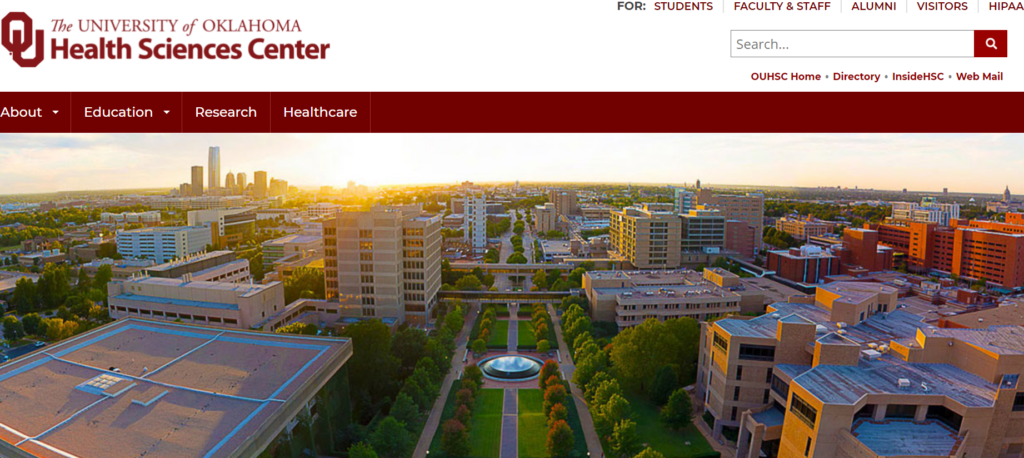
The overall objectives of the proposal are to improve the quality and quantity of cancer research and increase NIH funding at the University of Oklahoma Health Sciences Center (OUHSC), Oklahoma through the mentoring of promising junior Target investigators (Target investigators) and to develop support for the infrastructure for cancer research. Building on the success of […]
The Center for Neuroscience-based Mental Health Assessment and Prediction

Mood and anxiety disorders will account for approximately $16 x 109 lost productivity or 25% of global GDP over the next 20 years. Eating disorders are among the deadliest psychiatric diseases and Anorexia Nervosa is two to three times more deadly than schizophrenia, bipolar and major depressive disorder. The Center for Neuroscience-based Mental Health Assessment […]
Center for Visual and Cognitive Neuroscience
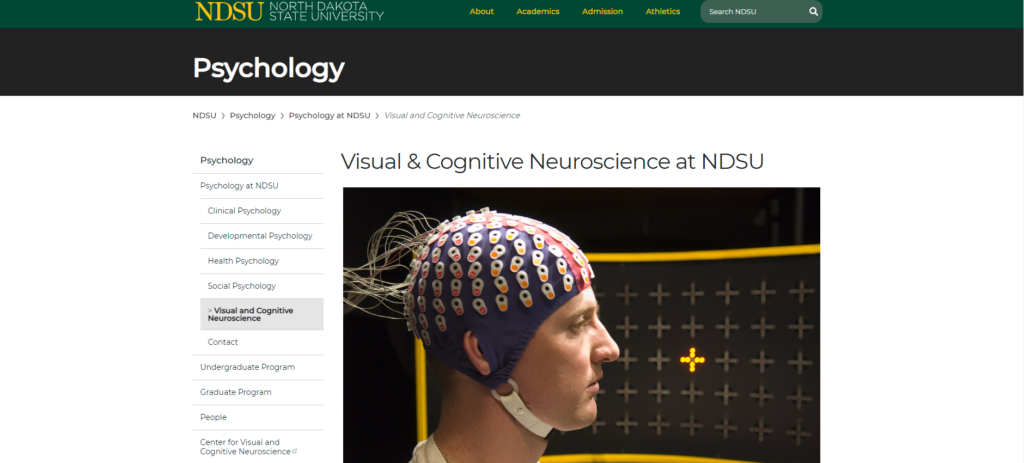
The NDSU COBRE Center for Visual and Cognitive Neuroscience (CVCN) has made significant progress toward fulfilling its Specific Aims in Phases I and II. We enhanced the biomedical research infrastructure by creating and maintaining six multiuser Scientific/Technical Core facilities. We expanded research capability in visual and cognitive neuroscience by recruiting six additional faculty into newly […]