
Upgrade to 9.4T Animal MRI Scanner: Midwest Regional Resource
This proposal requests support for new animal MRI scanner electronics system that will replace an obsolete system and provide dramatically improved capabilities. Once installed, this state-of-the-art system will support research from NIH-funded investigators representing four IDeA State institutions in the Midwest: University of Kansas Medical Center, University of Kansas-Lawrence, Kansas State University, and Pittsburg State […]
Console Upgrade and Cryogenic Probe for a 500 MHz NMR System for Biomedical Research
The Mary L. Vanier Biomolecular NMR Facility at Kansas State University, which has served more than 30 separate NIH-funded research projects and several other life sciences research groups (Total 45), requests partial funding to replace an obsolete Varian 500 MHz NMR system (originally purchased in 1993) with a newer console and a 5 mm cryogenic-probe. […]
The Effects of Differential Rearing on Glutamate Homeostasis and Addiction

Rodents reared in enriched conditions (EC) during childhood and adolescence have a variety of neurobiological and behavioral differences when compared to rodents reared in standard (SC) or isolated conditions (IC). These neurobiological differences impact numerous behaviors, including the response to drugs of abuse. The neurobiological mechanism for this effect remains unclear. Glutamatergic afferents to the […]
Kansas IDeA Network of Biomedical Research Excellence
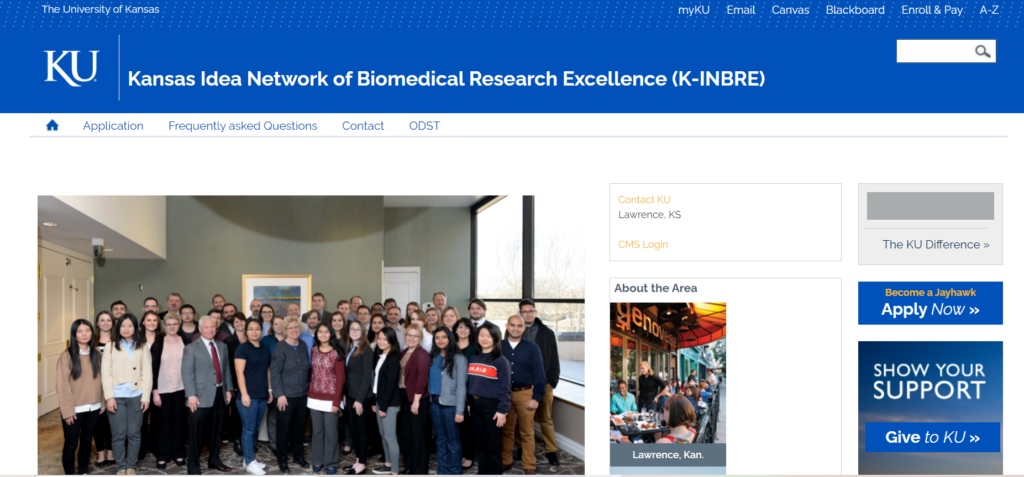
The Kansas IDeA Network of Biomedical Research Excellence (K-INBRE) is a statewide network of graduate and undergraduate universities in Kansas and Oklahoma that work cooperatively to improve biomedical research in Kansas. Kansas formed such a network in 2001 (Kansas BRIN) and has successfully continued as the Kansas INBRE. The University of Kansas Medical Center (KUMC) […]
Impact of Phosphaturia on Renal Osteopontin Production and PKD Progression
Autosomal dominant polycystic kidney disease (PKD) is characterized by the accumulation of numerous renal cysts leading to a progressive decline in kidney function, and frequently culminates in end-stage renal disease (ESRD). Aberrant tubular epithelial cell proliferation, macrophage infiltration, and tubulointerstitial fibrosis are important contributors to PKD progression; however, factors promoting these events remain undetermined. Systemic […]