
Center for Targeted Therapeutics
The principal Phase II goal of the COBRE Center for Targeted Therapeutics (CTT) is to conduct vital research oriented at identifying novel drug targets and discovering new targeted drugs, while enhancing the career development and research competitiveness of Center investigators. Targeted therapeutics is a broad term for research that seeks to develop new and more […]
Research Center for Child Well-Being
The prevalence rates for children’s mental, emotional, and behavioral (MEB) disorders, as well as for childhood obesity, are at alarmingly high levels and constitute major public health concerns. To address these critical problems in childhood, the University of South Carolina Research Center for Child Well-Being focuses on prevention and intervention research aimed at reducing risk […]
Center for Human Genetics
Common and rare genetic diseases affect a large fraction of the world’s population. Elucidating the mechanisms by which naturally occurring genetic variants affect disease risk requires multidisciplinary expertise in quantitative, population, molecular, cellular and developmental genetics; statistics, bioinformatics and computational biology; and functional genomics in cell culture and animal models. We propose a Center of […]
SutureCoach: Examining Vascular Suturing Skills Assessment, Training, and Transfer of Training via Objective Metrics
The skill of a surgeon is critical to successful patient outcomes. A recent landmark study reported that surgeons’ skill ratings were significantly correlated with clinical outcomes after surgery. A number of studies have documented medical errors that led to potential medical complications caused by unskilled surgical maneuvers. One way to reduce medical errors, now the […]
Dietary Supplements and Inflammation Phase-2

The overall objective of the COBRE Phase-2 for Dietary Supplements and Inflammation (CDSI) at the University of South Carolina (USC) is to continue to build on the success of Phase-1 and advance the research infrastructure specifically in the area of dietary supplements and inflammation by promoting multi-disciplinary research pursued by junior investigators so that they […]
A cross-talk between oxytocin and the endocannabinoids within the mesolimbic system regulates anxiety triggered by cocaine us
Oxytocin (OT) is a neuropeptide secreted by the hypothalamic paraventricular nucleus (PVN) and commonly associated with social behaviors, stress responses, and drug addiction. Previous studies have shown that OT has anxiolytic properties associated with cues in a cocaine-seeking behavior paradigm, but the underlying mechanism remains unknown. Clinical studies show that cocaine abuse has long-term effects […]
Center for Musculoskeletal Disease Research
Conditions such as osteoporosis, osteoarthritis, developmental abnormalities of the skeleton, as well as malignancies, such as multiple myeloma and breast cancer metastases, all negatively affect the musculoskeletal system. These conditions affect the health of a sizable percentage of the US population and lead to significant disability and substantial health care costs, and there is an […]
Arkansas Integrative Metabolic Research Center
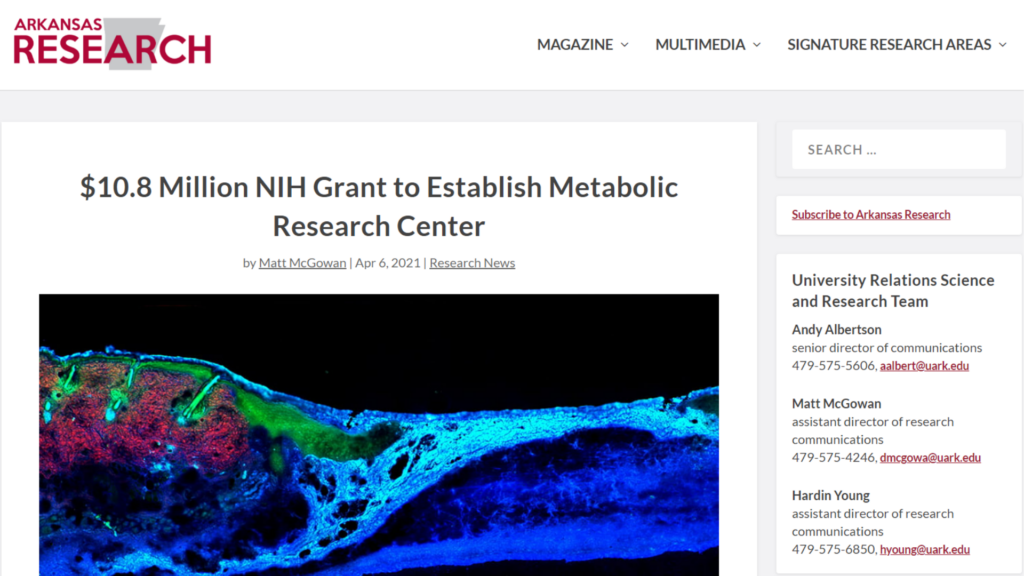
Project Summary for Overall Section of the Arkansas Integrative Metabolic Research Center The University of Arkansas – Fayetteville (U of A) is the flagship campus of the State of Arkansas but does not have active NIH COBRE funding on campus. A clear strength in biomedical research has emerged organically on campus, with the majority of […]
Center for Childhood Obesity Prevention
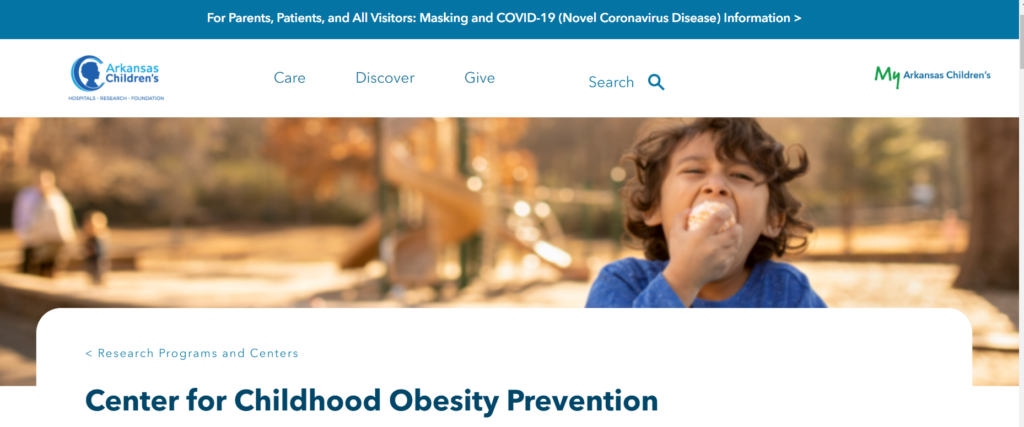
The goal of this application is to develop an integrated, interdisciplinary and translational Center for Childhood Obesity Prevention. Childhood obesity is a national public health threat that is disproportionately worse in Arkansas. Therefore, the immediate goal is to prevent the rise in Arkansas childhood obesity rates, with an ultimate goal of reducing childhood obesity rates […]
New Inhibitors Targeting HIV-1 Integrase During Viral Maturation

HIV-1 integrase (IN) is a validated clinical target and is essential for viral replication. During the early steps of infection, tetrameric IN associates with two viral DNA ends and catalyzes their integration into the host chromosome. A new class of allosteric IN inhibitors (ALLINIs) has been reported to inhibit enzyme function by promoting aberrant IN […]