
Visual Sciences Center of Biomedical Research Excellence
PROJECT SUMMARY/ABSTRACT: The overarching goal of the Visual Sciences CoBRE (VS-CoBRE) is to optimize infrastructure and mentoring to support a sustainable, multidisciplinary, and collaborative research environment at WVU around visual sciences. The establishment of the VS-CoBRE will strengthen the scientific community focused on understanding processes that are essential to visual health with the long-term goal […]
Appalachian Center for Cellular Transport in Obesity Related Disorders (ACCORD)
There is strong junior investigator interest and senior investigator expertise in cellular transport physiology at Marshall University’s School of Medicine (MUSOM). Many of the innumerable health disparities of West Virginia/Central Appalachia (WV/CA) have their roots in widespread obesity, which is epidemic in the region. At the epicenter of these disparities, MUSOM is well positioned to […]
West Virginia University Stroke COBRE
Proposed is the West Virginia Stroke CoBRE (here after called the Stroke CoBRE) with a focus area of stroke. The Stroke CoBRE was initiated as an essential part of the Center for Basic and Translational Stroke Research (CBTSR), a newly formed Center that is focused on enhancing basic and translational stroke research on the West […]
Tumor Microenvironment CoBRE
The efforts described in this CoBRE application will support the development of a Center of Excellence within the West Virginia University Health Sciences Center (WVU HSC) that will focus on studies of the tumor microenvironment (TME), designated the TME CoBRE. The overarching critical need for continued emphasis in this area is driven, in part, by […]
Coaching End-of-Life Palliative Care for End-Stage Heart Failure Patients and Their Family Caregivers in Rural Appalachia

Project Summary Heart failure (HF) afflicts 6.5 million Americans with devastating consequences to patients and their family caregivers especially during severe symptoms in the long-lasting end-stage. Families are rarely prepared for HF’s devastating consequences. West Virginia (WV), a large rural Appalachian region, has the highest HF death rates in the U.S. NIH designated Appalachia a […]
PM2.5 from Fracking Operations Induces Microvascular and Mitochondrial Dysfunction
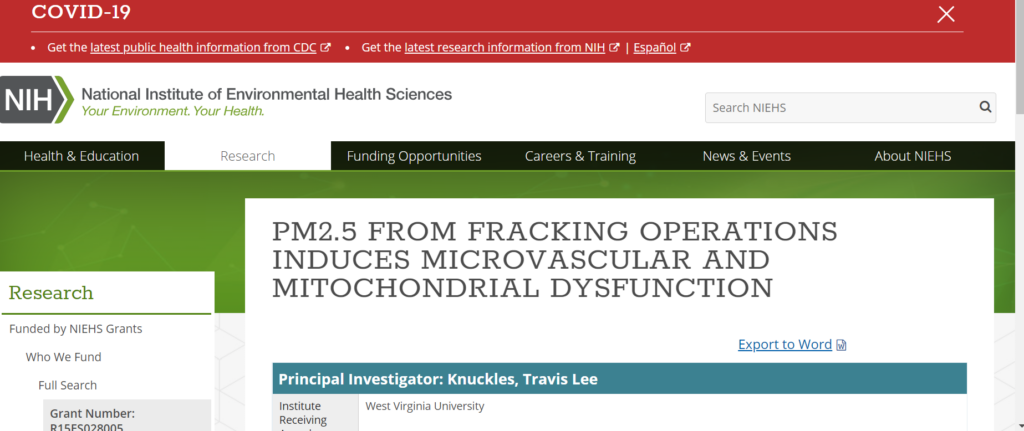
The production of shale gas, and the development of wells using horizontal drilling and hydraulic fracturing technology, is a major driver of the U.S. economy. The process of preparing well pads for completion of the work creates a complex mixture of airborne toxicants that includes elevated concentrations of particulate matter (PM), ultrafine particles (UFPs) from […]
West Virginia Clinical and Translational Science Institute: Improving Health through Partnerships and Transformative Research
The emergence of a novel coronavirus, now known as severe acute respiratory syndrome coronavirus 2 (SARS CoV-2), has resulted in human disease (COVID-19) that has swept the globe in pandemic proportions with more than eight million confirmed cases and >440,000 deaths to date. Surges of COVID-19 have occurred throughout the United States (US) with urban […]
West Virginia IDeA Network of Biomedical Research Excellence

West Virginia is a state that has had a historically low success rate in obtaining grant funds from the National Institutes of Health and has been designated as an IDeA state. In this renewal application, Marshall University (MU), in partnership with West Virginia University (WVU), will continue to build on the success of the West […]
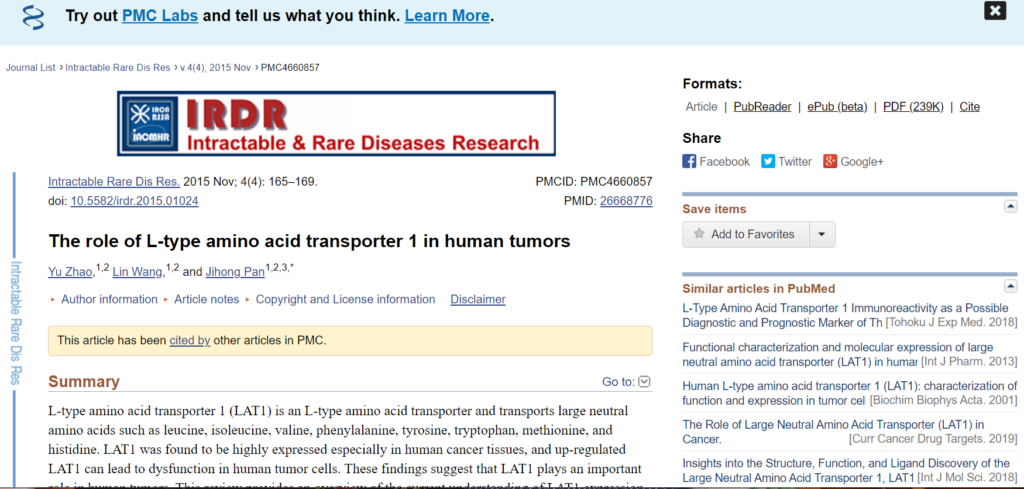
The Inhibitor of Growth Family Member 4 (ING4) inhibits L-Type Amino Acid Transporter 1 (LAT1) expression to suppress Breast Cancer
West Virginia is a state that has had a historically low success rate in obtaining grant funds from the National Institutes of Health and has been designated as an IDeA state. In this renewal application, Marshall University (MU), in partnership with West Virginia University (WVU), will continue to build on the success of the West […]