
South Carolina COBRE in Oxidants, Redox Balance and Stress Signaling

Overall – Abstract With Phase III COBRE support, the South Carolina Center in Oxidants, Redox Balance, and Stress Signaling (Redox COBRE) at the Medical University of South Carolina (MUSC) will complete its transition to long-term sustainability as a nationally competitive multidisciplinary research program in redox pathobiology. During Phases I and II, our Redox COBRE […]
COBRE in Neurodevelopment and Its Disorders

COBRE in Neurodevelopment and Its Disorders PROJECT SUMMARY The overall goal of the Center of Biomedical Research Excellence (COBRE) in Neurodevelopment and Its Disorders (CNDD) is to enhance research capacity by enabling outstanding multidisciplinary collaborative research in neurodevelopmental disorders (NDD) at the Medical University of South Carolina (MUSC). This area is of importance to […]
South Carolina IDeA Networks of Biomedical Research Excellence (SC INBRE)

The South Carolina IDeA Networks of Biomedical Research Excellence (SC INBRE) is a state-wide network comprised of three Comprehensive Research Universities (CRUs) and eleven Primarily Undergraduate Institutions (PUIs) whose goals are to enhance the biomedical research infrastructure and promote undergraduate research training in South Carolina while increasing access to research opportunities and careers in biomedicine […]
COBRE:Eukaryotic Pathogens Innovation Center

Eukaryotic pathogens are the causative agents of some of the most devastating and intractable diseases of humans, including malaria, amebic dysentery, sleeping sickness, Chagas disease, and meningitis. The global impact of these diseases is immense. It is noteworthy that many of these pathogens are the causative agents of neglected tropical diseases (NTDs) and/or are also […]
Dietary Supplements and Inflammation Phase-2

The overall objective of the COBRE Phase-2 for Dietary Supplements and Inflammation (CDSI) at the University of South Carolina (USC) is to continue to build on the success of Phase-1 and advance the research infrastructure specifically in the area of dietary supplements and inflammation by promoting multi-disciplinary research pursued by junior investigators so that they […]
COBRE in Stroke Recovery

The overall goal of this Phase II COBRE is to enable outstanding multidisciplinary collaborative research in recovery from stroke. Stroke recovery research is especially important to South Carolina, because a disproportionate rate of stroke incidence statewide results in undue economic, social and personal burdens from post-stroke disability. Our organizing concept is that increased understanding of […]
COBRE in Digestive & Liver Disease

The overall goal of the Center of Biomedical Research Excellence (COBRE) in Digestive & Liver Diseases (CDLD) is to enable outstanding multidisciplinary collaborative research in digestive and liver diseases at the Medical University of South Carolina. These diseases are of importance to the state of South Carolina because of the tremendous, disproportionate burden they have […]
Center for Targeted Therapeutics
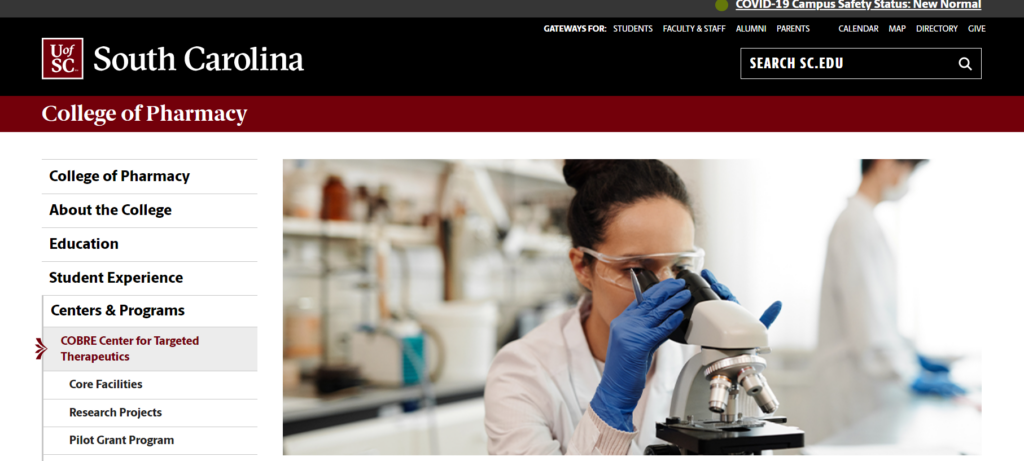
The principal Phase II goal of the COBRE Center for Targeted Therapeutics (CTT) is to conduct vital research oriented at identifying novel drug targets and discovering new targeted drugs, while enhancing the career development and research competitiveness of Center investigators. Targeted therapeutics is a broad term for research that seeks to develop new and more […]
Research Center for Child Well-Being
The prevalence rates for children’s mental, emotional, and behavioral (MEB) disorders, as well as for childhood obesity, are at alarmingly high levels and constitute major public health concerns. To address these critical problems in childhood, the University of South Carolina Research Center for Child Well-Being focuses on prevention and intervention research aimed at reducing risk […]
Center for Human Genetics
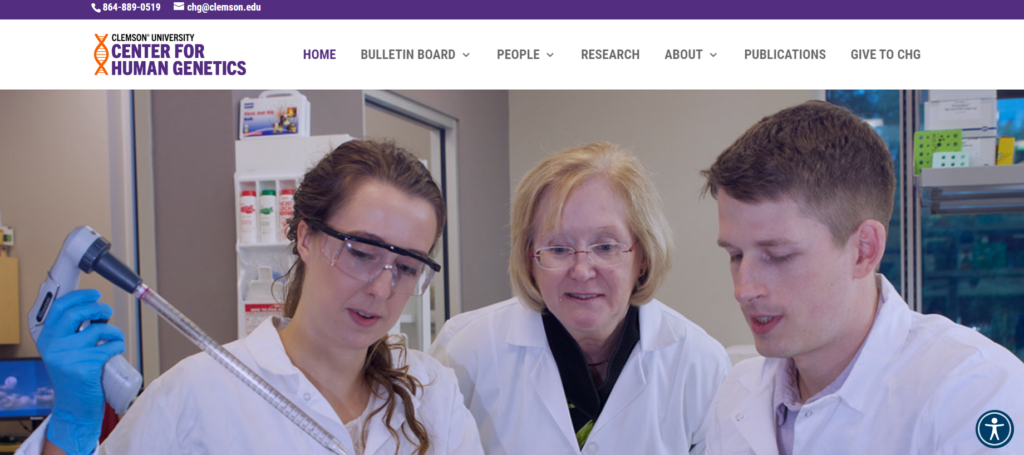
Common and rare genetic diseases affect a large fraction of the world’s population. Elucidating the mechanisms by which naturally occurring genetic variants affect disease risk requires multidisciplinary expertise in quantitative, population, molecular, cellular and developmental genetics; statistics, bioinformatics and computational biology; and functional genomics in cell culture and animal models. We propose a Center of […]