
Mammalian Hibernation Research- A Path Towards a Center for Transformative Research in Metabolism

Overall This application is in response to PAR-16-415, Centers of Biomedical Research Excellence (COBRE) (P20). The proposed phase 1 center (P1C) is built on a strong foundation and long-term commitment to hibernation research at the University of Alaska’s Institute of Arctic Biology (IAB). The objective of the P1C is to use the expertise at IAB, […]
Circulating Lipid and miRNA Narkers for Early Detection of Breast Cancer Among Women with Abnormal Mammograms
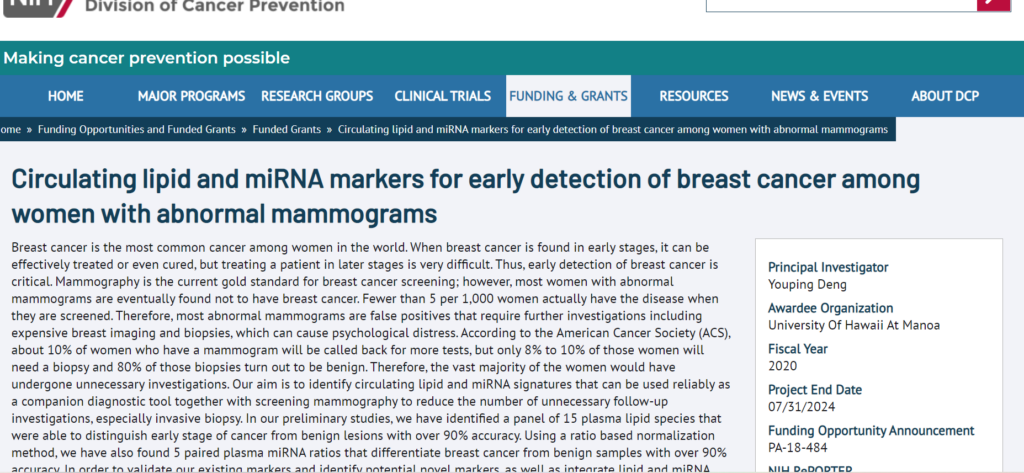
Breast cancer is the most common cancer among women in the world. When breast cancer is found in early stages, it can be effectively treated or even cured, but treating a patient in later stages is very difficult. Thus, early detection of breast cancer is critical. Mammography is the current gold standard for breast cancer […]
Integrative Center for Environmental Microbiomes and Human Health
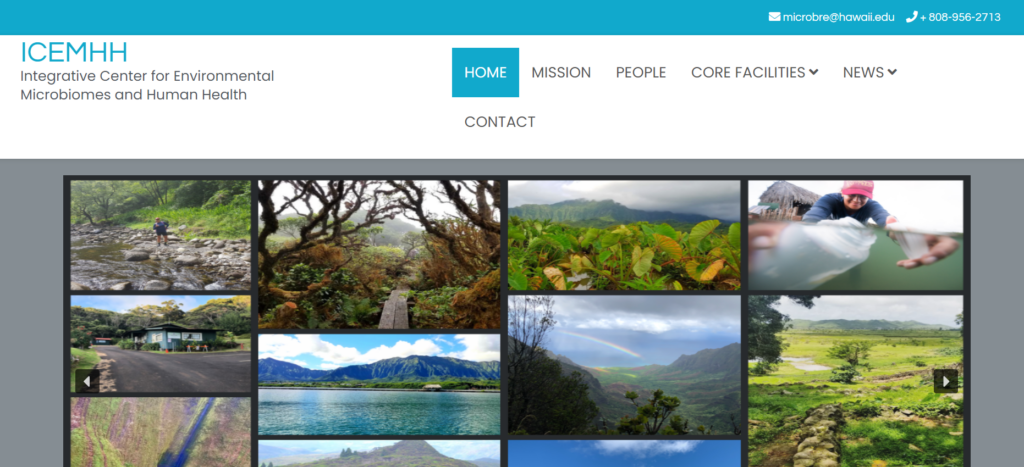
The goal of the proposed COBRE program is to create an Integrative Center for Environmental Microbiomes and Human Health (ICEMHH) in response to the 2016 announcement of the National Microbiome Initiative (NMI). The NMI was conceived through the recognition that humans are both connected to and reliant upon the microbial communities that constitute the Earth’s […]
COBRE-DIABETES

Overall The John A. Burns School of Medicine (JABSOM) at the University of Hawaii (UH) proposes to develop a multidisciplinary Hawaii-based Center of Biomedical Research Excellence (COBRE) in Diabetes Mellitus (DM). This Center will initially span departmental and eventually campus borders to promote the metabolic health of the people of Hawaii and the Pacific region. […]
Center for Translational Research on Aging

Kuakini Medical Center (Kuakini) proposes to develop a multidisciplinary Hawai’i-based Center of Biomedical Research Excellence (COBRE) for translational research on aging. This Center will draw on the most promising junior investigators from across the state with cross-institutional and interdisciplinary collaborative efforts between Kuakini, the University of Hawaii John A. Burns School of Medicine (JABSOM), and […]
IBR-COBRE Phase III

Overall Component Approximately 70,000 babies born in the U.S. in 2015 were conceived by artificial reproductive technologies (ART), which involves one of two techniques: in vitro fertilization (IVF) in which the sperm fertilizes the egg in vitro, or intracytoplasmic sperm injection (ICSI) in which the sperm is injected into the egg using micromanipulation. The rapid […]
Alaska INBRE 4 One Health

Since 2014, AK INBRE 3 has enhanced the research capacity of developing faculty and investigators throughout its network of University of Alaska universities by awarding pilot research grants, providing salaries to technicians, training of post-doctoral scientists and graduate and undergraduate students, and supporting travel, science advising, and equipment purchases. AK INBRE 3 provided support for […]
Wyoming IDeA Networks for Biomedical Research Excellence Phase 4

Wyoming INBRE Project Summary. The University of Wyoming (UW) is a land-grant institution and the only baccalaureate, post-secondary degree-granting institution in the State of Wyoming. This application is for a continuation of previous IDeA program awards managed through NIGMS (P20RR016474, 5P20GM103432). The long-term programmatic goal to establish a statewide network for biomedical research and excellence […]
Wyoming Sensory Biology COBRE

Abstract The primary mission of the Wyoming Sensory Biology COBRE (SBC) is to foster and conduct high-quality scientific research that advances the understanding of our sensory systems and disorders related to them. SBC will accomplish its mission through the augmentation and strengthening of UW’s institutional biomedical research capacity. This will be accomplished through building a […]
Bacterial Mechanisms for Establishing and Maintaining Cell Polarity
Many rod-shaped bacteria are polarized, meaning that one end of the cell is morphologically and functionally distinct from the other, but there is a general lack of understanding of the mechanisms by which polar asymmetry is established and maintained. Since polarized features provide critical spatial cues for many processes, including chromosome segregation and cell growth, […]